
GCSE · Biology · AQA GCSE Biology Notes: Infection and Response (Topic 3)
AQA GCSE Biology Notes: Infection and Response (Topic 3)
Opens inside this page. Prefer your own PDF app? Open the PDF.
Check yourself
5 quick questions on GCSE Biology
Tap an answer to see if you are right, and why. Free, no sign-up.
Start the free testWas this note useful?
Full text of AQA GCSE Biology Notes: Infection and Response (Topic 3)
These notes cover Topic 3, Infection and response, from the AQA GCSE Biology (8461) specification. The same content, apart from the section on monoclonal antibodies, is also examined in AQA GCSE Combined Science: Trilogy (8464) as topic B3. You will learn about the four types of pathogen and the named diseases they cause, how communicable diseases spread and are prevented, the body's defence systems and the role of white blood cells, how vaccination works, how new drugs are discovered and tested through clinical trials, how monoclonal antibodies are made and used (Biology only), and how plant diseases are detected and resisted. A key-terms glossary and a set of quick-check questions with full answers are provided at the end so this document can be used both as a revision guide and as a definitions sheet.
1. Pathogens and communicable disease
Pathogen: a microorganism that causes disease.
Communicable disease: a disease that can be passed from one host (person, animal or plant) to another.
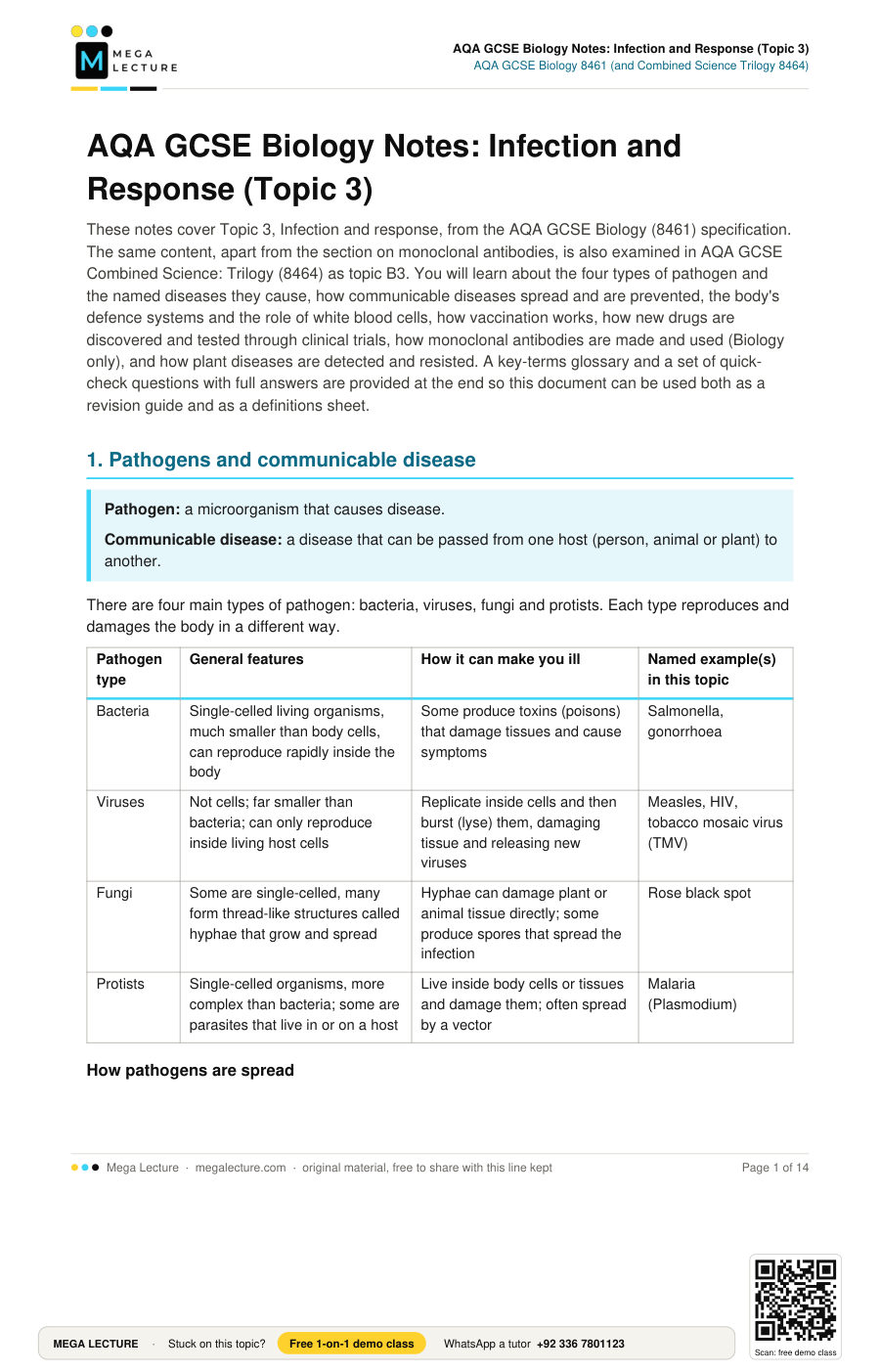
There are four main types of pathogen: bacteria, viruses, fungi and protists. Each type reproduces and damages the body in a different way.
| Pathogen type | General features | How it can make you ill | Named example(s) in this topic |
|---|---|---|---|
| Bacteria | Single-celled living organisms, much smaller than body cells, can reproduce rapidly inside the body | Some produce toxins (poisons) that damage tissues and cause symptoms | Salmonella, gonorrhoea |
| Viruses | Not cells; far smaller than bacteria; can only reproduce inside living host cells | Replicate inside cells and then burst (lyse) them, damaging tissue and releasing new viruses | Measles, HIV, tobacco mosaic virus (TMV) |
| Fungi | Some are single-celled, many form thread-like structures called hyphae that grow and spread | Hyphae can damage plant or animal tissue directly; some produce spores that spread the infection | Rose black spot |
| Protists | Single-celled organisms, more complex than bacteria; some are parasites that live in or on a host | Live inside body cells or tissues and damage them; often spread by a vector | Malaria (Plasmodium) |
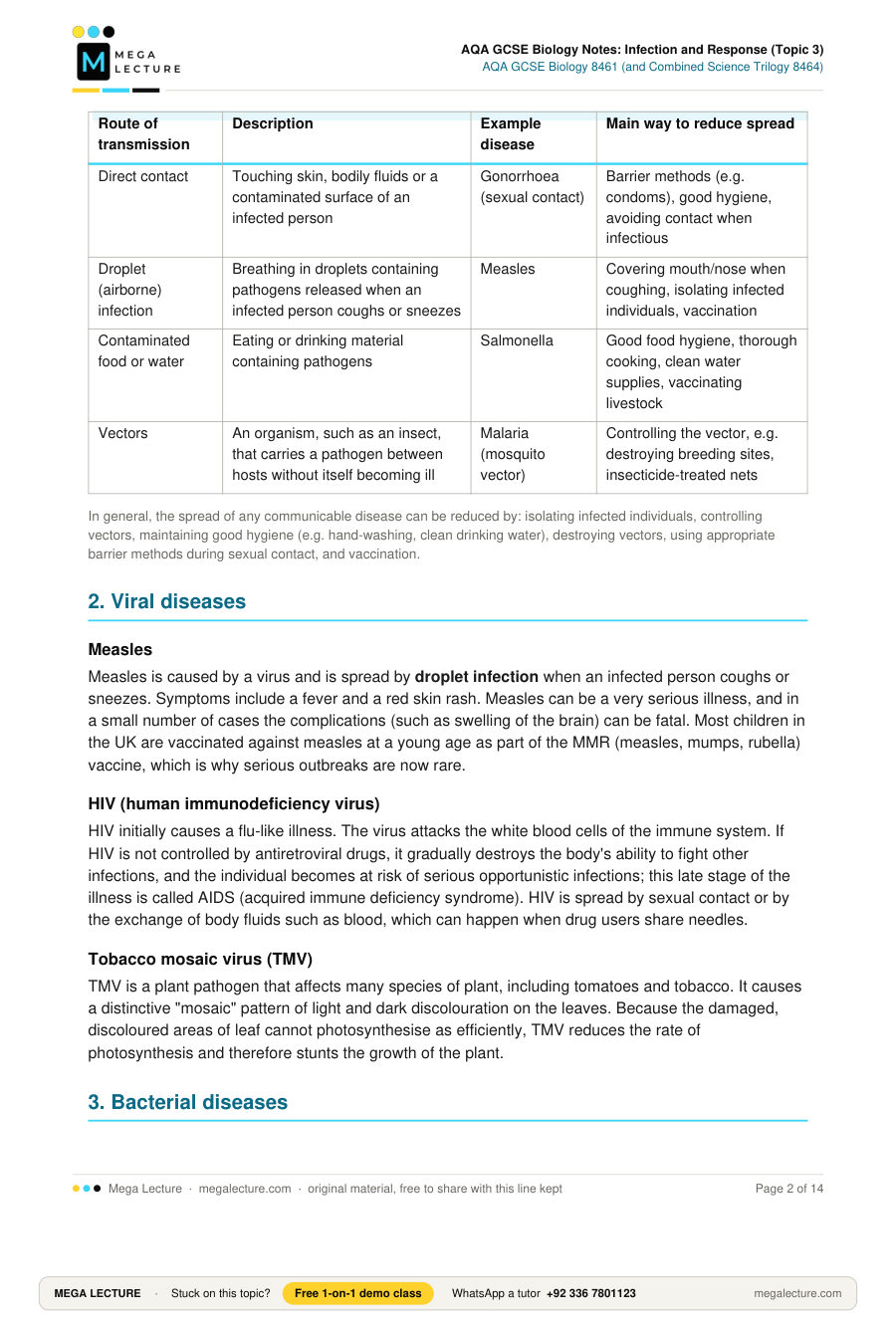
How pathogens are spread
| Route of transmission | Description | Example disease | Main way to reduce spread |
|---|---|---|---|
| Direct contact | Touching skin, bodily fluids or a contaminated surface of an infected person | Gonorrhoea (sexual contact) | Barrier methods (e.g. condoms), good hygiene, avoiding contact when infectious |
| Droplet (airborne) infection | Breathing in droplets containing pathogens released when an infected person coughs or sneezes | Measles | Covering mouth/nose when coughing, isolating infected individuals, vaccination |
| Contaminated food or water | Eating or drinking material containing pathogens | Salmonella | Good food hygiene, thorough cooking, clean water supplies, vaccinating livestock |
| Vectors | An organism, such as an insect, that carries a pathogen between hosts without itself becoming ill | Malaria (mosquito vector) | Controlling the vector, e.g. destroying breeding sites, insecticide-treated nets |
In general, the spread of any communicable disease can be reduced by: isolating infected individuals, controlling vectors, maintaining good hygiene (e.g. hand-washing, clean drinking water), destroying vectors, using appropriate barrier methods during sexual contact, and vaccination.
2. Viral diseases
Measles
Measles is caused by a virus and is spread by droplet infection when an infected person coughs or sneezes. Symptoms include a fever and a red skin rash. Measles can be a very serious illness, and in a small number of cases the complications (such as swelling of the brain) can be fatal. Most children in the UK are vaccinated against measles at a young age as part of the MMR (measles, mumps, rubella) vaccine, which is why serious outbreaks are now rare.
HIV (human immunodeficiency virus)
HIV initially causes a flu-like illness. The virus attacks the white blood cells of the immune system. If HIV is not controlled by antiretroviral drugs, it gradually destroys the body's ability to fight other infections, and the individual becomes at risk of serious opportunistic infections; this late stage of the illness is called AIDS (acquired immune deficiency syndrome). HIV is spread by sexual contact or by the exchange of body fluids such as blood, which can happen when drug users share needles.
Tobacco mosaic virus (TMV)
TMV is a plant pathogen that affects many species of plant, including tomatoes and tobacco. It causes a distinctive "mosaic" pattern of light and dark discolouration on the leaves. Because the damaged, discoloured areas of leaf cannot photosynthesise as efficiently, TMV reduces the rate of photosynthesis and therefore stunts the growth of the plant.
3. Bacterial diseases
Salmonella
Salmonella is a type of bacterium spread by eating food contaminated with the bacteria, or food prepared in unhygienic conditions. The bacteria themselves, and the toxins they produce, cause fever, abdominal (stomach) cramps, vomiting and diarrhoea. In the UK, poultry (such as chickens) are routinely vaccinated against Salmonella, which has greatly reduced the number of cases of food poisoning caused by this bacterium.
Gonorrhoea
Gonorrhoea is a sexually transmitted infection (STI) caused by a bacterium and spread by sexual contact. Symptoms include a thick yellow or green discharge from the vagina or penis, and pain on urinating. The spread of gonorrhoea can be controlled by treatment with antibiotics and by using barrier methods of contraception, such as condoms, during sexual intercourse. Gonorrhoea used to be treated easily with the antibiotic penicillin, but many strains of the bacterium are now resistant to penicillin, so other antibiotics must be used instead.
4. Fungal disease
Rose black spot
Rose black spot is caused by a fungus that affects rose plants. It causes purple or black spots to develop on the leaves, which often turn yellow and drop off early. Because the plant loses leaves, it cannot photosynthesise as effectively, which stunts its growth. The fungal spores are spread in the environment by water (rain splash) and by wind. Rose black spot can be treated by using fungicides and by removing and destroying the affected leaves, which reduces the number of spores available to spread the infection further.
5. Protist disease
Malaria
Malaria is caused by a protist pathogen and is spread by an insect vector, the mosquito. When a mosquito bites a person already infected with malaria, it takes in the protist pathogen along with the blood meal. When that mosquito then bites another, uninfected person, it passes the protist into their bloodstream, infecting them. Malaria causes repeating episodes of fever. Because the vector, not direct contact between people, spreads the disease, malaria is controlled mainly by preventing mosquitoes from breeding (e.g. removing standing water) and by preventing people from being bitten, using insecticide-treated mosquito nets and insect repellents.
Worked example — comparing spread and prevention
Q: Explain why using a mosquito net at night is an effective way to reduce the spread of malaria, but would not be effective against measles.
Malaria is spread by a mosquito vector, which usually feeds at night; a net acts as a physical barrier that stops the mosquito biting the person and transferring the protist pathogen, so it directly blocks the route of transmission. Measles, however, is spread by droplet infection when an infected person coughs or sneezes nearby; this route does not involve an insect vector, so a mosquito net has no effect on droplets in the air and would not reduce the spread of measles.
6. The body's non-specific defence systems
The human body has several defences that act as barriers to stop pathogens entering in the first place. These are described as non-specific because they work in the same way against any pathogen.
| Body part | How it defends against pathogens |
|---|---|
| Skin | Acts as a physical barrier to pathogens; produces antimicrobial secretions (sebum) that help kill pathogens on the skin surface; if the skin is cut, blood clots quickly to seal the wound and prevent pathogens entering |
| Nose | Hairs and mucus in the nose trap particles, including pathogens, that could be breathed in |
| Trachea and bronchi | Lined with mucus, which traps pathogens and dust, and cilia (tiny hairs), which sweep the mucus with trapped pathogens up and away from the lungs to be swallowed or removed |
| Stomach | Produces hydrochloric acid, which kills most pathogens swallowed in food or drink |
7. The immune system and white blood cells
If a pathogen does get past the body's barriers and enters the blood or tissues, the immune system's white blood cells help to destroy it. White blood cells defend the body in three main ways.
Antigen: a molecule (usually a protein) on the surface of a cell or pathogen that the immune system can recognise as foreign, triggering an immune response.
Antibody: a protein produced by white blood cells that has a shape complementary to a specific antigen, allowing it to bind to that antigen and help destroy the pathogen carrying it.
Antitoxin: a protein produced by white blood cells that neutralises (counteracts) the toxins produced by a pathogen.
| Defence mechanism | What happens |
|---|---|
| Phagocytosis | Certain white blood cells (phagocytes) engulf pathogens and digest them |
| Antibody production | White blood cells (lymphocytes) recognise antigens on the surface of a pathogen and produce antibodies with a complementary shape; these antibodies bind to the pathogen, helping to destroy it and marking it for destruction by other white blood cells; each antibody is specific to one type of antigen, so a different antibody is needed for each different pathogen |
| Antitoxin production | White blood cells produce antitoxins that bind to and neutralise the toxins released by some pathogens (e.g. certain bacteria), stopping the toxins from damaging the body's cells |
The first time the body meets a particular pathogen, it can take several days for white blood cells to produce enough of the correct antibody, during which time the person feels ill. Some of the lymphocytes produced remain in the blood afterwards as long-lived memory cells. If the same pathogen infects the body again, these memory cells allow a much faster and stronger antibody response, usually destroying the pathogen before any symptoms develop; the person is said to be immune to that pathogen.
8. Vaccination
Vaccination: introducing a small quantity of a dead, inactivated, or weakened (attenuated) form of a pathogen (or antigens from it) into the body in order to stimulate the white blood cells to produce antibodies, giving future protection against that pathogen without causing the disease.
Because the pathogen (or antigen preparation) in a vaccine is dead, inactivated or weakened, it carries the same antigens as the live pathogen but does not cause the full disease. The antigens still stimulate white blood cells to produce specific antibodies, and memory cells are produced in the same way as during a real infection. If the person is later exposed to the live pathogen, their white blood cells can respond quickly, producing antibodies fast enough to destroy the pathogen before the person becomes ill.
Worked example — herd immunity
Q: In a town of 25,000 people, 21,250 have been vaccinated against measles. Calculate the percentage of the population that has been vaccinated.[2]
Percentage vaccinated = (number vaccinated ÷ total population) × 100
= (21,250 ÷ 25,000) × 100 = 85%
When a high enough proportion of a population is vaccinated (as in the worked example above), the pathogen can no longer spread easily through the population, because most of the people an infected person might meet are already immune. This is called herd immunity, and it protects people who cannot be vaccinated themselves, such as some individuals with weakened immune systems, because they are very unlikely to come into contact with an infected person.
| Advantages of vaccination programmes | Disadvantages / risks of vaccination programmes |
|---|---|
| Can control and even eradicate diseases that were once common and dangerous (e.g. smallpox has been eradicated worldwide through vaccination) | A small number of people have mild side effects, such as soreness at the injection site or a slightly raised temperature |
| Protects individuals from serious illness, complications and death | Very rarely, a person may have a more serious reaction to a vaccine |
| Produces herd immunity, which protects people who cannot be vaccinated | No vaccine is guaranteed to work for every single person who receives it |
| Prevents epidemics (large local outbreaks) and pandemics (outbreaks that spread across countries) | Some vaccination programmes require repeated doses or boosters to maintain protection |
9. Treating disease: antibiotics, painkillers and antibiotic resistance
Painkillers and other medicines can relieve the symptoms of disease, such as pain and fever, but they do not kill the pathogen causing the illness, so they do not cure the disease itself; they simply make the patient more comfortable while their own immune system fights the infection.
Antibiotics, such as penicillin, are medicines that kill bacteria inside the body without harming the body's own cells. Different antibiotics work against different ranges of bacteria, so it is important that a specific bacterial infection is treated with an appropriate specific antibiotic. Antibiotics have no effect on viral pathogens: viruses reproduce using the host's own cells, so it is very difficult to develop a drug that damages the virus inside a cell without also damaging that body cell.
Antibiotic resistance: the ability of a bacterium to survive exposure to an antibiotic that would normally kill it or stop it growing, as a result of the bacterium having mutated.
Overuse and inappropriate use of antibiotics (for example, prescribing them for infections that are not serious, or for viral infections that they cannot treat) increases the rate at which antibiotic-resistant strains of bacteria develop, because it increases the chance that resistant mutants will survive and reproduce while non-resistant bacteria are killed off. MRSA (meticillin-resistant Staphylococcus aureus) is a well-known example of an antibiotic-resistant bacterium. To slow the development of resistant strains, doctors try to avoid prescribing antibiotics inappropriately, and patients are advised to complete the full course of antibiotics prescribed, so that all the bacteria causing the infection are killed rather than only the least resistant ones.
Worked example — zone of inhibition
In the required practical investigating the effect of antibiotics on bacterial growth, paper discs soaked in different antibiotics are placed on an agar plate that has been evenly coated with bacteria, using aseptic technique throughout to avoid contamination. The plate is incubated at around 25°C, rather than human body temperature (37°C), to reduce the risk of harmful pathogens growing; the lid is taped on, not sealed all the way round, so that gases can still enter and exit while contamination from the air is limited. After incubation, a clear circular area with no bacterial growth, called the zone of inhibition, forms around each disc where the antibiotic has stopped the bacteria growing. A larger zone of inhibition indicates a more effective antibiotic against that bacterium.
Q: A zone of inhibition around one antibiotic disc has a radius of 8 mm. Calculate its area, using area = πr2 and giving your answer to one decimal place.[2]
Area = π × r2 = π × 82 = π × 64
Using the calculator value of π (not the rounded 3.14): Area ≈ 201.06 mm2 ≈ 201.1 mm2 (1 d.p.)
10. Discovery and development of drugs
Traditionally, drugs were extracted or derived from plants and microorganisms.
| Drug | Original source | Use |
|---|---|---|
| Digitalis | Foxglove plant (Digitalis purpurea) | Treating certain heart conditions |
| Aspirin | Originally derived from a compound found in willow (Salix) bark and leaves | Painkiller and reducing fever |
| Penicillin | Discovered by Alexander Fleming from the Penicillium mould | The first widely used antibiotic, for treating bacterial infections |
Most new drugs today are synthesised by chemists working in the pharmaceutical industry, although the starting point for the chemical structure may still be a compound first found in a plant. Before a new drug can be used on patients, it must be tested and trialled to make sure it is safe and effective. This happens in two main stages.
Stage 1: Preclinical testing. The drug is tested in a laboratory using cells, tissues and live animals. This stage tests the drug for toxicity (whether it is poisonous), efficacy (whether it works) and finds a safe range of doses.
Stage 2: Clinical trials. If preclinical testing is successful, the drug is tested on human volunteers.
- Very low doses of the drug are given to healthy human volunteers, to test for toxicity and check for side effects.
- If the drug is found to be safe, further trials are carried out on patients to find the optimum dose for the drug — the dose that is most effective and has the fewest side effects.
- In many trials, patients are randomly divided into two groups: one group is given the new drug, and the other group is given a placebo (a substance that looks identical but contains no drug). In a double-blind trial, neither the patients nor the doctors running the trial know who has received the drug and who has received the placebo until all the results have been collected. This design prevents the expectations of the patients or the doctors from biasing the results.
The results of clinical trials are published and peer-reviewed, meaning other independent scientists check the methods and conclusions, before a drug is approved for general use.
11. Monoclonal antibodies (Biology only)
This section is required for AQA GCSE Biology (8461) but is not part of the Combined Science: Trilogy (8464) specification.
Monoclonal antibody: a single type of antibody, produced from a clone of genetically identical cells, that is specific to (will bind only to) one particular antigen.
Lymphocytes in the body naturally produce many different antibodies, each specific to a different antigen, but they cannot be collected as a single pure type. To produce large quantities of one specific antibody, scientists make monoclonal antibodies using the following process.
- A mouse is stimulated (injected) with the chosen antigen, so that its lymphocytes produce the antibody complementary to that antigen.
- Lymphocytes that produce the desired antibody are collected from the mouse.
- These lymphocytes are fused with a tumour cell (a cell that divides continuously), producing a hybrid cell called a hybridoma cell. This cell combines the ability of the lymphocyte to make the specific antibody with the ability of the tumour cell to divide indefinitely.
- The hybridoma cell divides rapidly to form a clone of many genetically identical cells, all producing the same specific antibody.
- Large quantities of the antibody are collected and purified. Because every cell in the clone is identical and produces the same antibody, the product is called a monoclonal ("single clone") antibody.
Uses of monoclonal antibodies
| Use | How it works |
|---|---|
| Pregnancy testing | Monoclonal antibodies on the test strip bind specifically to the hormone hCG (human chorionic gonadotrophin), which is present in the urine of pregnant women; binding produces a visible coloured line |
| Laboratory diagnosis | Used to measure the levels of hormones or other chemicals in a patient's blood or urine, or to identify particular pathogens, by binding specifically to the target molecule |
| Research — locating specific molecules | Bound to a fluorescent dye, monoclonal antibodies can bind to and label a specific molecule in a cell or tissue sample, allowing it to be seen under a microscope |
| Treating disease (e.g. some cancers) | Monoclonal antibodies can be designed to bind specifically to antigens found only on the surface of particular cells, such as cancer cells; when attached to a toxic drug or a radioactive substance, they can deliver treatment directly to the target cells while leaving healthy cells largely unaffected |
Although monoclonal antibodies have many potential uses, in practice they have caused more side effects in patients than originally expected, so they are currently used in medical treatment less widely than scientists once hoped.
12. Plant disease: detection and identification
Plants can be infected by communicable pathogens (as with rose black spot and TMV, above) and can also show poor growth caused by non-communicable mineral ion deficiencies. Both can produce similar visible symptoms, so careful identification is needed.
Visible signs of plant disease
- Stunted growth
- Spots on leaves
- Areas of decay (rot)
- Unusual growths
- Malformed stems or leaves
- Discolouration
- The presence of pests on the plant
Methods used to identify plant disease
- Reference to a gardening manual or website that describes and pictures common plant diseases
- Taking a sample of the infected plant to a laboratory, where the pathogen can be identified
- Using a testing kit that contains monoclonal antibodies, which detect specific pathogen molecules or the chemicals a plant produces in response to infection
Worked example — deficiency or disease?
Q: A gardener notices that the older leaves on a tomato plant have turned pale yellow between the veins, but the plant has no spots, rot or pests. Suggest, with a reason, a likely cause.[2]
The most likely cause is magnesium ion deficiency rather than a pathogen. Magnesium ions are needed to make chlorophyll, so a lack of magnesium causes chlorosis (yellowing of the leaves); the absence of spots, rot or pests makes an infectious pathogen less likely.
| Mineral ion deficiency | Role of the ion in the plant | Symptom of deficiency |
|---|---|---|
| Nitrate ions | Needed to make amino acids, which are used to build proteins and DNA, for healthy cell growth | Stunted growth |
| Magnesium ions | Needed to make chlorophyll, the green pigment used in photosynthesis | Chlorosis (yellowing of the leaves) |
13. Plant defence responses
Like animals, plants have evolved a range of defences against pathogens and against being eaten by herbivores.
| Type of defence | Examples |
|---|---|
| Physical defences | Cellulose cell walls act as a barrier that pathogens must break through; a tough waxy cuticle on the leaf surface prevents pathogens entering and reduces water loss; layers of dead cells around stems (e.g. bark on a tree) fall away, carrying any pathogens on their surface with them |
| Chemical defences | Production of antibacterial and antifungal chemicals that kill or inhibit pathogens; production of poisons that deter herbivores from eating the plant |
| Mechanical adaptations | Thorns and hairs that physically deter animals from feeding on the plant; leaves that droop or curl rapidly when touched, dislodging insects; mimicry, where a plant's appearance (e.g. markings resembling insect eggs) discourages animals from feeding or laying eggs on it |
Key terms
The definitions below use standard explanatory labels for the concepts in the AQA specification (e.g. "herd immunity", "antigen-binding site"); the underlying ideas are examinable, but you are not required to reproduce these exact labels word for word in an exam.
| Term | Definition |
|---|---|
| Pathogen | A microorganism that causes disease |
| Communicable disease | A disease that can be passed from one host to another |
| Non-communicable disease | A disease that cannot be passed between individuals, e.g. caused by lifestyle or genetics |
| Host | The organism that a pathogen lives in or on, and from which it obtains nutrients |
| Transmission | The process by which a pathogen is passed from an infected host to a new host |
| Vector | An organism that carries a pathogen from one host to another without itself being harmed by it |
| Droplet infection | Transmission of a pathogen through tiny droplets of saliva or mucus released when coughing or sneezing |
| Direct contact | Transmission of a pathogen by touching an infected person, their bodily fluids, or a contaminated object |
| Incubation period | The time between a pathogen entering the body and symptoms of disease appearing |
| Epidemic | A rapid spread of a disease to a large number of people within a community or region |
| Pandemic | An epidemic that has spread across multiple countries or continents |
| Virus | A very small non-cellular pathogen that can only reproduce inside living host cells, often destroying them in the process |
| Bacterium | A single-celled pathogen that can reproduce rapidly inside the body and may release toxins |
| Fungus | A pathogen, often forming thread-like hyphae, that can damage tissue directly or spread using spores |
| Protist | A single-celled pathogen, more complex than a bacterium, that often lives as a parasite and may be spread by a vector |
| Toxin | A poisonous substance produced by a pathogen that damages the host's tissues |
| Measles | A viral disease spread by droplet infection, causing fever and a red skin rash; can be fatal if complications occur |
| HIV | Human immunodeficiency virus; a virus spread by sexual contact or exchange of body fluids that attacks white blood cells of the immune system |
| AIDS | Acquired immune deficiency syndrome; the late stage of untreated HIV infection, when the immune system can no longer fight off other infections |
| Opportunistic infection | An infection that takes advantage of a weakened immune system, such as in late-stage HIV/AIDS |
| Antiretroviral drugs | Drugs that control HIV infection and slow progression to AIDS |
| Tobacco mosaic virus (TMV) | A virus that infects many plant species, causing a mosaic pattern of discolouration on leaves and reducing photosynthesis |
| Salmonella | A bacterium spread through contaminated food, causing fever, cramps, vomiting and diarrhoea |
| Food poisoning | Illness caused by eating food contaminated with harmful bacteria or their toxins |
| Gonorrhoea | A sexually transmitted bacterial infection causing genital discharge and pain when urinating |
| Sexually transmitted infection (STI) | A disease spread through sexual contact |
| Barrier method | A method of contraception, such as a condom, that also reduces transmission of STIs by preventing exchange of bodily fluids |
| Rose black spot | A fungal disease of roses causing purple/black leaf spots, yellowing and early leaf loss, reducing photosynthesis |
| Fungicide | A chemical used to kill fungi or stop fungal growth |
| Malaria | A disease caused by a protist pathogen, spread by mosquitoes, causing repeating episodes of fever |
| Mosquito | The insect vector that spreads the protist pathogen causing malaria between human hosts |
| Sebum | An antimicrobial oily secretion produced by the skin that helps prevent pathogens colonising the skin surface |
| Mucus | A sticky substance produced in the nose, trachea and bronchi that traps pathogens and particles |
| Cilia | Tiny hair-like structures lining the trachea and bronchi that sweep mucus and trapped pathogens away from the lungs |
| White blood cell | A blood cell of the immune system that defends the body by phagocytosis or by producing antibodies and antitoxins |
| Phagocyte | A type of white blood cell that engulfs and digests pathogens |
| Phagocytosis | The process by which a phagocyte engulfs and digests a pathogen |
| Lymphocyte | A type of white blood cell that produces antibodies and antitoxins specific to a pathogen's antigens |
| Antigen | A molecule on the surface of a cell or pathogen that the immune system recognises as foreign |
| Antibody | A protein produced by lymphocytes with a shape complementary to a specific antigen, helping to destroy the pathogen carrying it |
| Antitoxin | A protein produced by lymphocytes that neutralises a toxin produced by a pathogen |
| Memory cell | A long-lived lymphocyte, produced after infection or vaccination, that allows a faster antibody response if the same pathogen is met again |
| Immune / immunity | Being protected against a specific pathogen, usually because memory cells allow a rapid antibody response |
| Vaccine | A preparation containing a dead or inactive form of a pathogen, used to stimulate immunity without causing disease |
| Vaccination | The process of giving a vaccine to stimulate the immune system to produce antibodies and memory cells against a pathogen |
| Herd immunity | Protection of a population, including unvaccinated individuals, that occurs when a high enough proportion of the population is vaccinated to stop a pathogen spreading easily |
| Antibiotic | A medicine, such as penicillin, that kills bacteria inside the body without damaging human cells |
| Antibiotic resistance | The ability of a bacterium, arising from mutation, to survive treatment with an antibiotic that would normally kill it |
| MRSA | Meticillin-resistant Staphylococcus aureus; a well-known bacterium resistant to many antibiotics |
| Painkiller | A drug that relieves the symptoms of disease, such as pain or fever, without killing the pathogen causing it |
| Aseptic technique | A set of laboratory procedures used to prevent unwanted microorganisms from contaminating cultures or equipment |
| Culture medium | A nutrient material, such as agar jelly, on which microorganisms are grown in the laboratory |
| Zone of inhibition | The clear area around an antibiotic disc on an agar plate where bacteria have not grown, because the antibiotic has killed them or stopped their growth |
| Preclinical testing | Testing of a new drug on cells, tissues and live animals in the laboratory, to check toxicity, efficacy and dosage before human trials |
| Clinical trial | Testing of a new drug on human volunteers, to check its safety, dosage and effectiveness |
| Toxicity | How poisonous or harmful a substance is to the body |
| Efficacy | How effective a drug is at producing the intended, beneficial effect |
| Optimum dose | The dose of a drug that gives the greatest benefit with the fewest side effects |
| Placebo | A substance with no active drug in it, given to one group in a trial for comparison with the group given the real drug |
| Double-blind trial | A clinical trial in which neither the patients nor the doctors know who has been given the drug or the placebo until the results are collected, to avoid bias |
| Peer review | The checking of scientific work, methods and conclusions by other independent scientists before publication |
| Monoclonal antibody | A single type of antibody, produced from a clone of identical cells, that binds specifically to one type of antigen |
| Hybridoma cell | A cell formed by fusing an antibody-producing lymphocyte with a tumour cell, capable of dividing continuously and producing a specific antibody |
| Antigen-binding site | The part of an antibody with a shape complementary to a specific antigen, allowing the antibody to bind to it |
| hCG | Human chorionic gonadotrophin; a hormone present in the urine of pregnant women, detected using monoclonal antibodies in pregnancy tests |
| Chlorosis | Yellowing of plant leaves, often caused by a deficiency of magnesium ions needed to make chlorophyll |
| Nitrate deficiency | A lack of nitrate ions in a plant, needed for making amino acids and proteins, causing stunted growth |
| Waxy cuticle | A waterproof, waxy layer on the surface of a leaf that acts as a physical barrier against pathogens and reduces water loss |
| Mechanical defence | A physical structure or behaviour, such as thorns or leaves that curl when touched, that a plant uses to deter herbivores |
Quick check
- Name the four types of pathogen.[4]
- State how malaria is spread from an infected person to an uninfected person.[1]
- Give the disease caused by each of the following pathogens: (a) a virus that affects tobacco and tomato plants, (b) a bacterium spread through contaminated food.[2]
- Describe two ways in which the skin defends the body against pathogens.[2]
- Describe how phagocytosis destroys a pathogen.[2]
- Explain why antibiotics can be used to treat gonorrhoea but not measles.[3]
- Explain how vaccination can lead to a person becoming immune to a disease.[4]
- In a survey, 3,600 out of 4,000 pupils at a school had been vaccinated against measles. Calculate the percentage of pupils vaccinated.[2]
- Explain why a double-blind trial, rather than simply giving every volunteer the new drug, is used to test the efficacy of a new painkiller.[3]
- Describe how a monoclonal antibody is produced, starting from a mouse injected with a chosen antigen.[5]
- Evaluate the use of antibiotics to treat every case of bacterial infection in a hospital without testing which antibiotic is most effective.[4]
- A gardener notices that a young bedding plant is stunted and its leaves are pale green all over the plant (not just yellowing between the veins of the older leaves), with no spots, rot or pests present. Suggest, with a reason, a likely cause of these symptoms, and explain one way this differs from the tomato-plant example above.[3]
1. Bacteria, viruses, fungi, protists.
2. By a mosquito vector, which bites an infected person and then bites and infects another person.
3. (a) Tobacco mosaic virus (TMV); (b) Salmonella.
4. The skin acts as a physical barrier that stops pathogens entering the body; it also produces sebum, an antimicrobial secretion that helps kill pathogens on the skin's surface.
5. A white blood cell (phagocyte) engulfs the pathogen, surrounding it, and then digests it, breaking it down and destroying it.
6. Gonorrhoea is caused by a bacterium, and antibiotics kill bacteria inside the body without damaging human cells, so they are effective against it. Measles is caused by a virus, and viruses reproduce inside the body's own cells; it is very difficult to develop a drug that destroys the virus without also destroying the human cell it is inside, so antibiotics have no effect on measles.
7. A vaccine contains a small amount of a dead or inactive pathogen, which carries the same antigens as the live pathogen but cannot cause disease. This stimulates white blood cells to produce antibodies specific to those antigens, and some lymphocytes remain afterwards as memory cells. If the live pathogen later infects the body, the memory cells allow antibodies to be produced quickly enough to destroy the pathogen before the person becomes ill, so the person is immune.
8. Percentage = (3,600 ÷ 4,000) × 100 = 90%.
9. If every volunteer were simply given the new drug, any improvement they reported might be due to the placebo effect (patients feeling better simply because they believe they are being treated) rather than the drug itself. By comparing a group given the drug with a group given an identical-looking placebo, and keeping the identity of each group unknown to both patients and doctors until the results are collected, any real difference in effect between the two groups can be attributed to the drug itself rather than to bias or expectation.
10. The mouse is injected with the chosen antigen so its lymphocytes produce the complementary antibody. Lymphocytes producing this antibody are collected from the mouse and fused with a tumour cell, forming a hybridoma cell. The hybridoma cell divides repeatedly to form a clone of genetically identical cells, all producing the same antibody. This antibody is then collected and purified in large quantities as the monoclonal antibody.
11. Using antibiotics without first testing which one is most effective against the specific bacterium could mean the wrong, less effective antibiotic is used, allowing the infection to persist and potentially worsen. Widespread, non-specific use of antibiotics also increases the risk that resistant strains of bacteria (such as MRSA) will develop and spread through the hospital, because bacteria that survive the antibiotic can reproduce, passing on any resistance mutation. However, waiting for test results takes time, and for a seriously ill patient with a fast-developing infection, starting treatment immediately with a broad-spectrum antibiotic may be necessary to prevent the infection worsening before results are available. On balance, testing first and prescribing a specific antibiotic only when needed is preferable whenever the patient's condition allows the delay, since it gives more effective treatment and reduces the development of resistance; immediate treatment without testing should be reserved for urgent cases where any delay itself poses a serious risk to the patient.
12. The most likely cause is a deficiency of nitrate ions rather than a pathogen. Nitrate ions are needed by the plant to make amino acids, which are used to build proteins and DNA for healthy cell growth, so a lack of nitrate causes stunted growth and general paleness of the leaves across the whole plant; the absence of spots, rot or pests makes infection by a pathogen less likely, pointing instead to a mineral ion deficiency. This differs from the magnesium-deficiency example above, where the yellowing (chlorosis) is localised between the veins of the older leaves rather than affecting the whole plant, and stunted growth is not a typical symptom.
These notes are original material written for Mega Lecture from the AQA GCSE Biology specification and general subject knowledge, for revision use alongside your own class notes and the current AQA specification document.
